![]() |
| Marielle Heller (Source: Getty Images) |
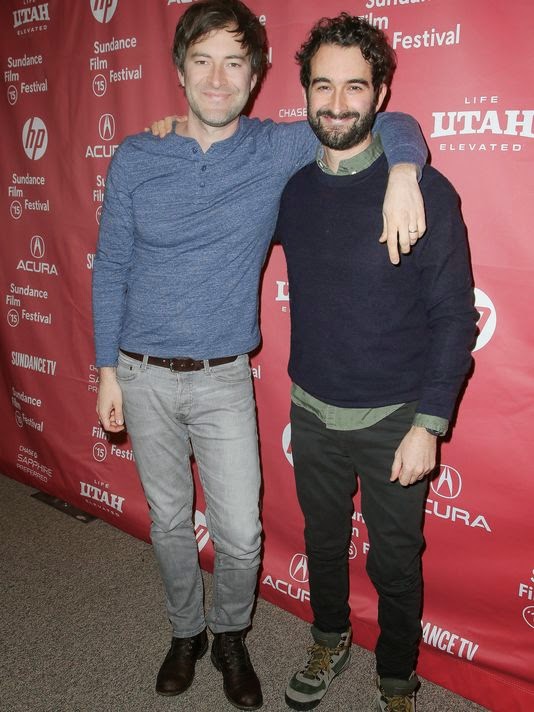
| Duplass Brothers. Photo: Chelsea Lauren (Getty Images for Sundance) |
![]() |
| Marielle Heller (Source: Getty Images) |
| Duplass Brothers. Photo: Chelsea Lauren (Getty Images for Sundance) |
The first weekend of the 2013 Sundance Film Festival, which
usually makes up the busiest days of its entire run, has come to an end
with most of the highly anticipated titles having been screened at least once
for film lovers and industry hopefuls who are searching for the next
breakthrough film no one has seen coming. Indeed here in Sundance, it is rarely
a movie with star attachments that takes the industry by storm in the
competition categories. On the contrary, it’s usually a small film from a
newbie. If you look at the ticketing page of the festival for advice on how to
navigate your way through sold out shows, you’ll notice these words of wisdom:
“Be adventurous with last-minute film
choices! Last year’s Grand Jury Prize winner Beasts of the Southern Wild had
200 empty seats at its first screening.” While there hasn’t necessarily been a showstopper such as Beasts of the Southern Wild yet (not
including the big premieres, here), a few titles managed to stir up some debate
and get the attention of the crowd temporarily stationed in Park City. Among
these, none of them received as consistently great reactions as Randy Moore’s Escape From Tomorrow, a title I was able
to see late yesterday night as part of the festival’s NEXT section dedicated to
finding bold and innovative works. The film follows a family of four on the
last day of their trip to Disneyland, which starts with the father Jim (Roy
Abramsohn) losing his job over a phone call he receives from his boss. Hiding
the news from his wife and young children, Jim’s final day at the theme park
takes a surreal detour, turning the “happiest place on earth” into a David
Lynch-esque nightmare for the family. Shot in black and white with a crisp,
classic look that hints a taste of the French New Wave, Escape From Tomorrow is an effective and disturbing look at our
contemporary tastes and willingness to embrace the mass-produced, coating our
individualism to make each of us one of the same. Director Moore is a newcomer,
and thus, it’s a mystery to everyone -including myself- how he managed to shoot
a feature length narrative film in Disneyland completely on the sly. Yes, he
had no permits; just a dedicated cast and crew who agreed to walk around with
cameras, posing to be tourists. “We almost get caught once”, said Moore during
the post screening Q&A, also noting that their shot list was much longer
than their script, with every single move and location intricately planned and
learned on paper. Cinetic is
representing the film for potential distribution deals; and since it’s safe to
say that Disney is soon going to file a lawsuit against the filmmaker (and he
is aware of that), it is hard to predict if a theatrical future is in the cards
for Escape From Tomorrow. One can
only hope.
Other titles I was able to fit in from the NEXT section were
Shaka King’s Newlyweeds, whose mild
humor, buried within a script as cloudy and directionless as its subjects,
failed to impress; and Chad Hartigan’s This
Is Martin Bonner, a film that effectively depicts the loneliness of its
characters with the kind of sensitivity and humanity one would expect from Mike
Leigh. It was refreshing to see this film which speaks to mature audiences.
Over at the US Dramatic Competition, many buzz-worthy titles
had their initial shots at becoming the next big prizewinner as the entire crop
has been screened at least once. I have so far seen (apart from Cherien Dabis’ May In The Summer which I already talked
about in my Day 1 recap), John Krokidas’ Kill Your Darlings,
David Lowery’s Ain’t Them Bodies
Saints, and Francesca Gregorini’s Emanuel and The Truth About Fishes (with
a few more coming up tomorrow and Tuesday); and among these, David Lowery’s
title easily stands out with its slowburning, lyrical Texan tale of love torn apart by
crime. Blending a western look with Malick-esque storytelling, Lowery’s
handle on the joyless lives of his characters (with pitch-perfect performances
by Casey Affleck, Rooney Mara and Ben Foster) impresses and bruises. It’s the
kind of movie that will attract a lot of admiration, yet perhaps not
enthusiasm. Krokidas’ Kill Your Darlings,
which tells a story of murder in the early college years of American poet Allen
Ginsberg, is stylish in bringing back a period to life, and once again features
phenomenal performances by the entire cast (including Ben Foster, once again);
yet the film goes slightly off the rails in its 3rd act, which can
simply be salvageable through re-editing. Lastly, Francesca Gregorini’s Emanuel And The Truth About Fishes tells
a surreal, quiet story of coping, longing, letting in and letting go. Emanuel,
a sharp yet mysterious teen living with her dad and stepmother (in an initially
stagnant, yet increasingly keen performance by Kaya Scodelario) forms a bond
with the cool next door neighbor Linda (Jessica Biel) and the turn of events
brings her closer to understanding loss. Despite the gorgeous cinematography
and the interesting nuances in the film which constructs Linda’s story as the
antithesis of Emanuel’s, this title is unlikely to resonate in this category. I
am still planning on seeing Shane Carruth’s Upstream
Color, Jordan Vogt-Roberts’ Toy’s
House and Lynn Shelton’s Touchy Feely;
however based on the early reviews and instant Twitter reactions of critics
attending the festival, it is safe to say that Toy’s House has a real shot at being the winner of this category.
In the US Documentary Competition, I wouldn’t be
exaggerating if I said almost all titles here are creating the kind of buzz
that makes them look like potential winners. Documentaries have been enjoying a
fruitful theatrical run in 2012 continuing the trend of the previous few years,
and this year’s Sundance titles suggest that we can continue to expect
greatness from non-fiction storytellers. I have managed to fit in Martha Shane
and Lana Wilson’s After Tiller, and
Morgan Neville’s Twenty Feet From Stardom
(see my Day 1 recap) into my schedule so far –and it’s worth
mentioning not all titles have been screened in this category yet- but based on
what I’m so far hearing, the competition might be between these two. I am
personally a big fan of both titles, but would be especially pleased if After Tiller, a vital, inevitable
documentary for which “brave” doesn’t come close to being a sufficient
definition, wins this category. Following 4 doctors who perform late term/3rd
trimester abortions in the US, After
Tiller gives voice to those who stand in the extreme end of an already
controversial topic. Given the political dimension of the story, and the
expected hate it will attract, all screenings of this doc (which the doctors
themselves attended as well), were tightly monitored by a security staff. I am
still looking forward to seeing Greg Barker's Manhunt: The Search For Osama Bin
Laden and Zachary Heinzerling’s Cutie and
The Boxer.
Lastly, the Premieres –which are usually the most star-studded
entries of the festival- made for a colorful few days here in Park City. Park
Chan-Wook’s Stoker, which favored
style over substance in what happened to be the festival’s biggest
disappointment for me, widely divided audience reactions. In The East, Zal Batmanglij’s second
collaboration with the beautiful Brit Marling and his follow up to the
masterful Sound Of My Voice, tension
and mystery were tightly managed to the advantage of this highly entertaining film’s
pace. Among the titles I haven’t yet seen,
sex –as Robert Redford mentioned during the opening press conference- seems to
be a recurring theme in films such as Don
Jon’s Addiction (Joseph Gordon Levitt’s directorial debut), Anne Fontaine’s
Two Mothers, and Drake Doremus’ Breathe In. I look forward to catching
more of these titles before I depart on Wednesday. When one looks at the last weekend, it is easy to see that
none of the titles have been generating as much buzz as Richard Linklater’s Before Midnight, his third and final
(perhaps?) installment of the trilogy, which started out with Before Sunrise and Before Sunset. It had its first screening earlier tonight and many
critics on Twitter have already declared it a masterpiece. I am seeing it
tomorrow morning at 8:30 am and it won’t be easy, especially after tonight’s
Fox Searchlight party that was still in full swing as I was heading back to my
condo at well after midnight.
The 2013 edition of the Sundance Film Festival kicked off yesterday
with an opening day Press Conference, where the “Sundance Kid” Robert Redford
(Founder and President of Sundance Institute), Keri Putnam (Sundance Institute
Executive Director) and John Cooper (Sundance Film Festival Director) engaged
in a conversation with the members of press, moderated by The Salt Lake Tribune
film critic and columnist Sean P. Means.
Redford’s opening remarks celebrated film as an agent of
change and took pride in Sundance’s mission to embrace and use it, giving The
New Frontier –which brings high technology and the artist together in a social
and creative space- as an example. The course of the conversation revealed
impressive first-time stats around the diversity of this year’s 190-film slate,
which includes 51 first-time filmmakers and represents 32 countries around the
globe. It also touched upon the equal divide between male and female filmmakers
in the Dramatic Competition, which is another first at Sundance. When talking
about the visible trends in this year’s slate (as well as the submissions that
didn’t make the cut), Redford and Cooper both quoted an evolved study of sex,
one that is not necessarily tied to romance but more to relations. In response
to a question from a press member, the trio also drew attention to the musically
rich offerings of this year’s program with titles such as Sound City and Twenty
Feet From Stardom. Following a political diversion where the topic switched to
guns vs. media, the conference ended with Redford announcing that Sundance is
not going to Brooklyn (despite the false news that ran a short while ago).
Following the press conference, both films I was able to see
on the festival’s first day coincidentally align with one of the trends that
were raised earlier in the conversation. May In The Summer, directed by Cherien Dabis, is one of the dramatic competition titles from a female filmmaker.
Following her 2007 Sundance sensation Amreeka which was that year’s Grand Jury
Prize winner in Dramatic Competition, Dabis once again depicts the inner
workings of a family against a contrasting cultural backdrop and reunites with
many of the same cast members, including the great Hiam Abbass. Despite Dabis’
best intentions though, she only manages to deliver a watchable film with May
In The Summer, that suffers from a simple-minded yet cluttered script. In portraying
the relationship of three Jordanian sisters’ with each other and their mother
(for which Dabis, who also plays one of the sisters, admittedly was inspired
by her own family), May In The Summer seems more concerned about ticking predictable
boxes around the universal troubles of females, rather than injecting a breath
of fresh air into the topic. Still, its somewhat naïve charm played reasonably
well with the crowd in a packed Eccles.
After a quick stop at Indiewire’s annual condo party, the
second film I caught, Morgan Neville’s Twenty Feet To Stardom (which competes
in the U.S. Documentary section), has the potential to become the next music
documentary hit and is already generating some potential distribution buzz. I
caught a late press screening, however got word that the film, which shines a
spotlight on five back-up singers (Merry Clayton, Darlene Love, Lisa
Fischer, Judith Hill and Tata Vega) – the unsung heroines who sang back-up
for icons such as Rolling Stones, Sting, Bruce Springsteen and Stevie Wonder- received
a standing ovation during its Eccles premiere earlier that evening, with
Clayton, Hill and Vega taking the stage at the post-screening Q&A for a
brief impromptu performance. This is an irresistible title with many
legendary/familiar tracks, including “Gimme Shelter”, which is the subject of
the film’s perhaps most spellbinding set piece that will surely leave all future
audiences speechless. Sundance Institute announced earlier this week that all five singers and
multi-platinum recording artist The Fray will perform at the annual ‘A
Celebration of Music in Film’ event on January 20; a performance which many at Sundance
look forward to attending.
For film buffs not attending the Sundance Film Festival, the hardest part is hearing the great raves for a film you might not be able to see for months, if not a year. This year's Sundance market has been hot for pickups. Fox Searchlight has picked up two high-profile films so far at the festival. Fortunately, both are set to release theatrically later this year.
Beasts of the Southern Wild. The director of this movie, Benh Zeitlin, actually graduated from my college a couple years before me. His talent was evident. His thesis film, "Egg," a stop-motion, silent, animated recreation of Moby Dick taking place inside an egg that itself was about to be destroyed, was a sight to behold. It later won the Grand Jury Prize at Slamdance.
Beasts reportedly has a similar fantastical bent, with Variety calling it a "stunning debut" and THR naming it "one of the most striking films ever to debut at the Sundance Film Festival." Set in New Orleans and starring a poor black girl, the movie likely offers oblique commentary on the post-Katrina landscape. Fox Searchlight paid $6 million for the pickup, a high but not record figure.
The Surrogate. John Hawkes stars as a man confined to an iron lung who wants to lose his virginity. The plot sounds sad, but THR reassures that the movie is more similar to The King's Speech than The Diving Bell and the Butterfly. In his review, Todd McCarthy characterizes the 1980s-set movie as a "feel-good fairytale," a "cheerful" story that "argues in favor of living a full life, whatever one’s personal constraints." Still, an iron lung sounds tougher to market than a king with a lisp, but the message could have a nice awards resonance. Searchlight is also planning a 2012 release.
I'll continue to report on the Sundance films that have been picked up to open in a theatre near you.
Last week I saw the Sundance Award-winning documentary Restrepo (read FJI's review here). Directors and journalists Tim Hetherington and Sebastian Junger (author of The Perfect Storm) followed a group of soldiers in the Korengal Valley for a year. In an area known as "The Valley of Death," these soldiers engage in firefights every day, and up to multiple times a day--the kind of combat not seen since Vietnam. The documentary's stated purpose is to document the life of the soldiers, without including the overarching politics or outside viewpoints. I enjoyed the documentary, with some hesitations. After hearing it lambasted by another blogger, who felt the movie "misleads and distorts in a way that any fair-minded person would and should find infuriating," I feel the need to weigh in.
The documentary opens with the kind of scene that scares you half to death and gives you a huge adrenaline rush. While in an armored Hum-V, the soldiers take fire. They abandon their vehicle, take cover, and return fire. The camera moves Blair Witch-style, looking down at the ground as the camera operator runs for cover. Sonically, it goes from recording huge booms and gunfire so loud it's distorted, to eventually losing all sound, broadcasting a barely perceptible static. It's freaky, and one of those scenes you can't believe is real, because it feels like a movie.
Of course, most of the time the soldiers are hanging out, horsing around, or shooting at targets hundreds of yards away. They also have weekly meetings with local elders, and occasionally wake up residents in the middle of the night to gain information or detain them for questioning. Here, my sentiments toward the soldiers were not as positive. These soldiers are not culturally sensitive. You can understand their frustration, but at the same time they act incredibly rude. The leader speaks to the elders with exasperation, annoyed that they are still focusing on the errors of his predecessor. The soldiers laugh about "the cow incident," in which they killed (and ate) a villager's cow that had become tangled in their fence, but they also don't seem understand how the cumulative impact of these incidents can engender ill will among the residents. No wonder the townspeople are hiding the Taliban, and the situation seems like it can only get worse.
Even if the documentary itself doesn't address how this behavior can affect what's going on in the bigger picture, its scenes are indelible. This week, General Stanley McChrystal is in the news for his comments in a Rolling Stone article, which just led to his dismissal as top U.S. commander in Afghanistan. When I read the article, I paid attention to the new military strategy referred to as COIN (counterinsurgency theory). "Think the Green Berets as an armed Peace Corps," the article explains, you "[send] huge numbers of ground troops to not only destroy the enemy, but to live among the civilian population and slowly rebuild, or build from scratch, another nation's government." I seriously doubt that the soldiers' presence in the Korengal Valley fostered good will among the locals. At its most benign, their actions were a nuisance and prone to misunderstandings. Once the soldiers start taking residents out of their homes in the middle of the night, killing cows and speaking to them in rude and frustrated voices, the relationship between the locals and the soldiers becomes one of toleration. Trust? How can they trust each other? The residents are hiding Taliban and soldiers accidentally kill innocent people trying to find them. By presenting footage without extensive commentary or contextualization, the filmmakers are doing audiences the favor of letting them draw their own conclusion.
Restrepo shows, it does not tell. Will everyone that watches the documentary be worried about how the soldiers treat the locals? No. But with many sources of information about the war in Afghanistan, there is a place for a documentary like Restrepo, and its portrait of Afghanistan is one I will remember for a long time.
Dolphins deserve their stuffed animal status. They're cute, friendly, intelligent, and have been known to protect humans from sharks and other perils. Their very appeal to humans, however, is what endangers them. The documentary The Cove focuses on the small fishing community of Taiji, Japan, where dolphins are sold to "swim-with-the-dolphins" businesses and performing aquariums around the world, and the dolphins not selected are shepherded into a hidden cove where they are killed with harpoons.
The leader of the anti-captivity movement, Richard O'Berry, is a dolphin-lover who has been on both sides of the debate. He trained the dolphins used for "Flipper" for ten years before having a change of heart, and has spent three times as long, as he puts it, undoing what the show unleashed. He's been particularly vocal against what goes on in Taiji, the center of the captivity trade, to the point where he is followed by police investigators wherever he goes. With a team of dolphin (a.k.a. cetacean) activists on his side, they devise a way to film the slaughter, Ocean's 11 style.
Interwoven with their filming mission is background about the intelligence of dolphins, the International Whaling Commission's inability to regulate smaller cetaceans like dolphins, and evidence that many people are unwittingly eating dolphins. Often marketed as whale meat, dolphin meat has a dangerous amount of mercury that makes it unfit for regular consumption.
The best--and worst--parts of The Cove are the incredibly powerful scenes of animal cruelty. Copious amounts of blood are spilled, to the point where the blood gushing out of the elevator in The Shining seems like a trickle. It's incredibly convincing, and enough to make some people rethink their positions about the mammals.
For someone like me, a middle-of-the-roader who enjoys eating meat and fish and has a rather pragmatic view about where animals are in the grand scheme of things, I think awareness is everything. I consider it my responsibility to know about the consequences of my choices, and where my food came from. After seeing this documentary, I would hesitate before participating in a swim-with-the-dolphins program. I certainly can't abide by slaughtering dolphins for food, especially when the food itself can cause health problems. It's ironic, though, that the very captivity programs the activists are trying to stop are what endear children to the animals in the first place, and make them want to protect them later on. The winner of the Sundance 2009 documentary award, The Cove is a great example of a confrontational animal-rights documentary that can inspire activism--you can visit the activist part of their website here--while alienating few.
Reporting from Park City, Utah, FJI contributor Daniel Steinhart lets us in on the films and acquistions of the Sundance Film Festival.
Even though attendance seems down his year, the Sundance Festival was in full swing Saturday night and all day Sunday. Shuttle buses were packed and Main Street in Park City was teeming with locals, tourists, cineastes and the odd celebrity.
At the festival's midpoint, favorites have emerged with rumors of buyers circling a half dozen films. Since the last update, Sony picked up the Blaxploitation homage Black Dynamite, Fox Searchlight signed a deal for the romantic drama Adam, and Magnolia Pictures nabbed Humpday (see previous post for my review of that film.)
In the Dramatic Competition, this viewer has yet to find anything on par with last year's impressive award-winner Ballast, which injected new life into American independent cinema. This year, Cherien Dabis' Amreeka looked to stand out from the crop of American indies. The film, actually a U.S.-Canadian-Kuwaiti co-production, follows a Palestinian divorce and her teenage son who emigrate to Illinois to live with relatives. They have high hopes for a new life of opportunity but arrive just as the U.S. invades Iraq, encountering prejudice and bad luck in their new home. Aiming to shed light on the effects of American aggression on the Arab diaspora in the U.S., the film doesn't offer much penetrating insight. Ultimately, the depiction of cultural differences and ignorance seems more in the service of melodramatic effects.
A different kind of cross-cultural story is offered up in Sophie Barthes' Cold Souls. Paul Giamatti plays a version of himself, an actor who finds it increasingly difficult to separate himself from his lead role in the Chekhov play Uncle Vanya. His solution is to have his soul extracted by a soul storage company. When his new soulless self produces only bad acting, he rents the soul of a depressed Russian poet, which seems to deliver the goods. In the meantime, his original soul is stolen away to Russia, where Giamatti must track it down. All of this should be original material, but the questioning of identity, the self-reflexive performance, and the mix of fantasy and comedy recall Being John Malkovich.
In the Documentary Competition, Jeff Stilson's Good Hair examines African-American hair culture with Chris Rock as guide. Like too many documentaries these days, the film uses a competition as a structuring device�in this case, an annual Atlanta hair battle with stylists staging ludicrous coiffures. This is the stuff of reality TV, but the film is thankfully saved by amusing tangents on the process of hair straightening and production of the weave.
Also in the Doc Comp, Tom DiCillo's When You're Strange serves as a personal love letter to Jim Morrison and the music of The Doors. This too could have been fodder for television, wherein band members and witnesses recount the formulaic rise, fall and redemptive coda of a rock star. Instead, DiCillo fashions his film entirely out of historical footage, overlaid with matter-of-fact narration. For Doors fans, the material will be familiar, but the concert and studio footage still holds amazing power. And it all moves with the driving rhythm of a song like "Not to Touch the Earth."
The World Dramatic Competition offered very strong work. Lone Scherfig's An Education has been one of the more highly anticipated films of the festival. This well-made British film tells the story of Jenny (wonderfully played by Carey Mulligan), a beautiful and intelligent 16-year-old who attracts the attention of an older and charming admirer (Peter Sarsgaard). Jenny, whose tastes and curiosity transcend her drab surroundings, is swept up by the worldliness of her suitor, but their infatuation comes at a devastating cost. The movie has many elements in the right place: a fine script by Nick Hornby, assured direction, and strong performances from its leads and supporting roles (Alfred Molina is particularly good as Jenny's father). This film will undoubtedly make its way to theaters and please crowds.
Another British film, Unmade Beds, takes a looser approach to love and longing. Made by Argentine director Alexis Dos Santos, the film is a nice evolution from his debut, Glue. While Glue focused on a punk teenager stuck in a dead-end Patagonian town, Unmade Beds opens up, exploring the lives of two foreigners searching for fulfillment in vibrant London. Axl is a young Spaniard in search of the father who abandoned him. Vera is a young Belgian reeling from a break-up and exploring a new romance. Both live in the same squat, yet their paths rarely cross, with objects�a mattress, a jacket, a Polaroid�connecting the two. Unmade Beds is episodic and a little nebulous, but Dos Santos brings an exciting, impressionistic style to the film and a natural sense of visuals and music. As Glue's soundtrack had me listening to the Violent Femmes' "Kiss Off" endlessly, this new film inspired me to put Good Shoes' "We Are Not the Same" on repeat. Not a bad way to pass the time on the bus between screenings.